Key Takeaways
- Automation and AI are revolutionizing payroll processes, enhancing efficiency and accuracy.
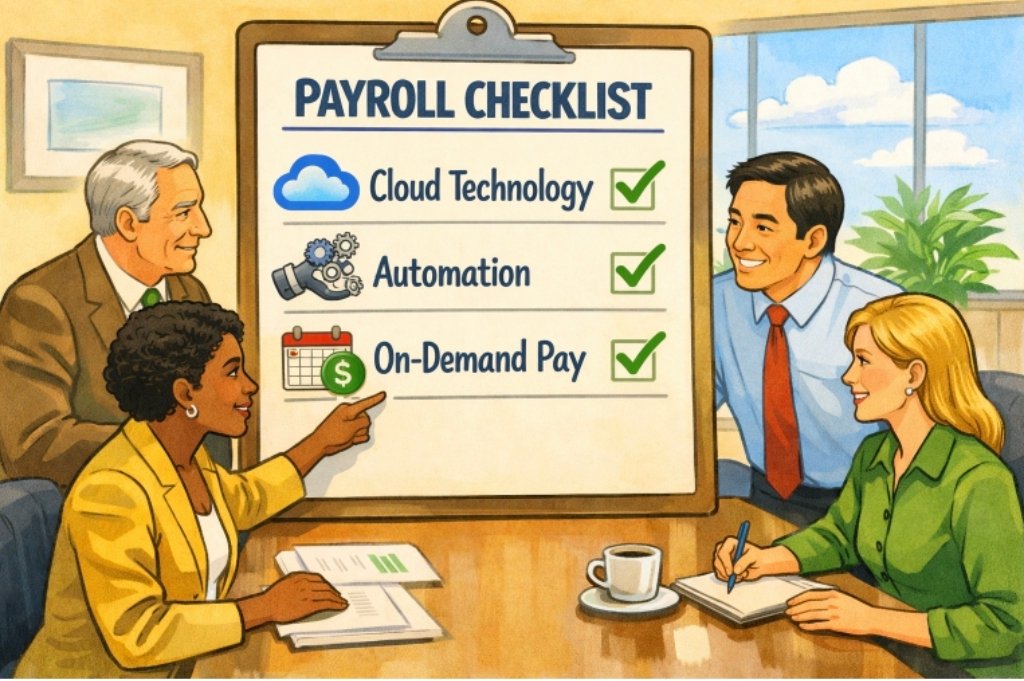
- Cloud-based solutions offer flexibility and scalability, catering to diverse workforce models.
- On-demand pay options are becoming essential to meet employee expectations.
- Outsourcing payroll services can alleviate administrative burdens and ensure compliance.
Introduction
In today’s dynamic business world, efficient payroll management is more vital than ever. As workforces grow more dispersed and employment models evolve, traditional payroll systems are challenged to keep up with changing needs. Companies now seek innovation to reduce administrative tasks, enhance employee satisfaction, and ensure reliable, secure, and accurate pay processing. Cloud-based solutions are at the forefront, offering new ways to tackle longstanding payroll complexities. Tools such as cloud-based service platforms provide employers with seamless accessibility and scalability. These next-generation systems deliver more than just convenience; they increase accuracy, enable real-time reporting, and simplify compliance with labor regulations, shaping the future of employee management across industries.
Adaptation is crucial as businesses navigate regulatory changes, remote workforces, and heightened employee expectations. Modern payroll solutions are transforming with advanced technology to deliver greater control, fewer errors, and increased transparency. The payroll landscape is rapidly shifting, empowering employers to meet emerging workplace challenges head-on.
For leaders preparing their organizations for the next wave of workforce management, understanding these trends is essential. From automation and artificial intelligence (AI) to innovative pay options, the right systems can secure a significant competitive advantage. For an in-depth look at the evolving payroll sector and actionable insights, Forbes provides comprehensive research and industry analysis: Rethinking Payroll: How AI Is Transforming One Of HR’s Most Critical Functions.
Embracing Automation and AI in Payroll
Payroll management has historically been manual, with a high propensity for clerical errors. The arrival of automation and AI now enables companies to eliminate time-consuming tasks and improve data accuracy at every stage. Automated platforms can perform tax, overtime, and deduction calculations instantly, streamlining the pay cycle and mitigating risk. AI-driven payroll systems use predictive analytics to flag potential compliance risks or patterns of employee dissatisfaction before they escalate. These capabilities not only free up HR staff to focus on strategic initiatives but also ensure a superior employee experience by minimizing delayed or incorrect payments.
Leveraging Cloud-Based Payroll Solutions
Cloud computing is redefining payroll by introducing flexibility that aligns with distributed and hybrid work structures. Cloud-based payroll platforms make it easy for authorized personnel to securely access and manage payroll data from virtually any location or device. This enhanced accessibility is essential for supporting teams that may be spread across different offices or even continents. Cloud systems also offer built-in data backup and recovery features, significantly strengthening business continuity plans. With real-time dashboard reporting, business leaders can make faster, better-informed decisions about workforce management. Additionally, many cloud solutions update automatically with the latest features and security protocols, eliminating the need for complex manual upgrades or IT support. This minimizes the risk of data breaches, helps ensure regulatory compliance, and enables businesses to scale their operations as needed. The shift toward cloud-based payroll tools is not only about convenience, as it’s also about future-proofing business processes for a rapidly evolving digital landscape, offering greater adaptability and forward-thinking resource management.
Implementing On-Demand Pay Options
Employee expectations have shifted, with workers seeking greater flexibility in accessing their wages. On-demand pay allows staff to withdraw earned wages before official payday. This option boosts employee engagement, supports financial wellness, and is proven to improve retention rates. For businesses, adopting flexible pay solutions can serve as a key differentiator in a competitive talent market.
As organizations continue exploring employee-centric benefits, on-demand pay sits alongside wellness programs and flexible scheduling. This emerging trend signals that payroll is no longer just a back-office function, but a strategic driver for human capital management, employee loyalty, and organizational resilience in a competitive economy.
Outsourcing Payroll Services for Efficiency
While technology has simplified payroll, the administrative demands of compliance and recordkeeping remain significant, especially for small businesses and startups. Many organizations are turning to specialized payroll service providers to streamline operations, ensure timely and accurate payments, and maintain compliance with ever-changing tax laws and labor policies.
Outsourcing allows internal teams to focus on mission-critical business activities rather than routine processing. It also minimizes liability, given the expertise and advanced security protocols that leading providers bring to data management. Research conducted by the American Business Times highlights the overall positive impact of outsourcing on payroll efficiency and compliance: U.S. Firms Adopt Outsourced Payroll Services to Simplify Payroll Management. Moreover, payroll service providers keep pace with developments in payroll legislation, significantly lowering the manual effort for businesses to stay compliant. As workplace models become more hybrid and cross-border, expert third-party support is increasingly sought after to mitigate risk and increase operational accuracy.
Ensuring Compliance in a Changing Landscape
The laws and regulations governing payroll are frequently amended at the local, state, and federal levels. Advanced payroll systems help companies stay up to date with legal requirements, preventing costly errors and financial penalties. Automated compliance checks and real-time alerts facilitate timely updates, affording peace of mind for both employers and employees. Leveraging technology for compliance is not just efficient; it is indispensable in a complex regulatory environment.
Enhancing Employee Experience Through Payroll
Timely and transparent payroll processes play a powerful role in employee satisfaction. Modern solutions now feature self-service portals that allow employees to access pay stubs, update personal information, and download tax forms at their convenience. These enhancements reduce HR workloads and build stronger trust with employees, further supporting recruitment and retention strategies.
Companies that invest in next-generation payroll platforms are seeing positive feedback from staff members who value transparency and autonomy. Strong payroll management is quickly becoming a cornerstone of brand reputation and employee advocacy.
Conclusion
The changing future of payroll is rooted in modernization, and the most successful businesses will be those that introduce smarter, faster, and more adaptable systems. By investing in automation, cloud-based solutions, on-demand pay, and best-in-class outsourcing, organizations can drive efficiency, remain compliant, and nurture a high-performing workplace. Embracing these changes not only simplifies employee management but also sets businesses up for long-term growth as the workforce continues to evolve.