
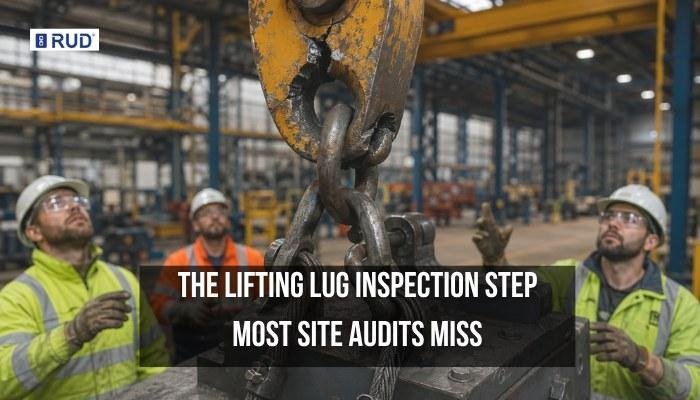
Most lifting lug inspections on site follow the same routine, and they have for years. A quick visual check, a tick on the form, and the team moves on to the next item.
But the defects that cause equipment failure under load won’t show up that way. Cracks below the surface, stress fractures inside welds, and early corrosion at the lug root all sit beyond what a visual pass can detect.
It’s a pattern our team at RUD Australia sees across mining, manufacturing, and construction operations. This article covers the one lug inspection step that too many sites skip, and why your audit process needs it.
Why Visual Checks on Lifting Lugs Fall Short
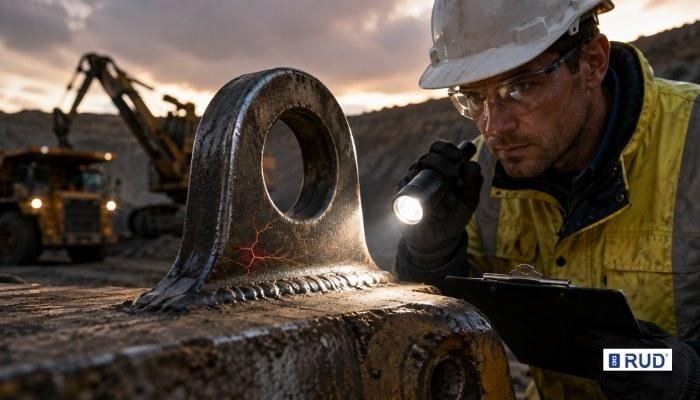
As we briefly mentioned, most lug inspections stop at what’s visible. Corrosion, bent lugs, cracked paint, and obvious weld damage will all show up during a walkthrough.
But the defects that cause failures don’t sit on the surface. Fatigue cracks develop inside the weld root, and stress fractures grow along load-bearing zones where repeated lifting cycles wear the metal down over time.
Unfortunately, these are the defects you won’t spot without the right equipment. We’ve pulled lifting lugs off mine sites and fabrication yards that looked fine to every inspector on site. Under MPI testing, those same lugs showed crack indications running through the weld root (and that’s not a hypothetical).
Safe Work Australia’s code of practice on managing risks of plants in the workplace reinforces this point. The code covers inspection requirements from installation through to decommissioning, and fixed lifting points fall under that same scope.
So if visual checks aren’t catching these defects, what will?
The Lifting Equipment Safety Step Most Audits Skip
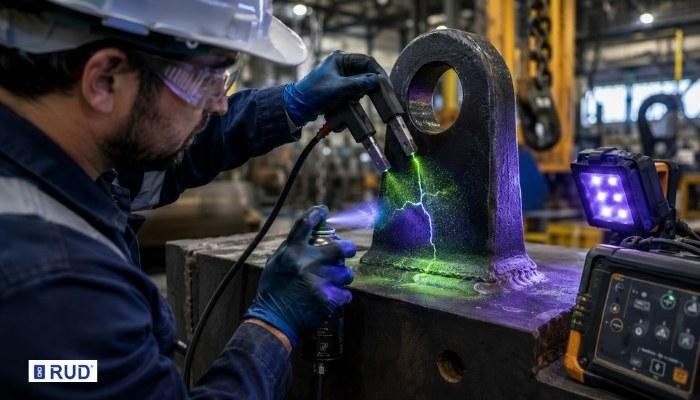
Non-destructive testing methods like magnetic particle inspection (MPI) give you what a visual check can’t. They detect cracks and flaws beneath the surface without damaging the lug.
Here’s what that inspection step looks like when it’s done properly.
The inspector magnetises the lifting point and applies fine iron particles across the surface. Where a subsurface crack exists, the magnetic field breaks and pulls those particles into a visible cluster along the flaw. It’s a reliable, tested method that regulators and Australian Standards recognise.
What’s more, Safe Work Australia defines a plant to include components fitted or connected to the plant. That means permanently welded lifting lugs carry the same inspection obligations as the machinery they’re attached to.
Despite that, many site audits still skip this step for fixed connection points. And no amount of personal protective equipment will cover the gap it leaves behind.
Personal Protective Equipment Won’t Compensate for Missed Inspections
PPE protects your workers from hazards around the lift. Hard hats, harnesses, and gloves reduce injuries from sharp edges, rough surfaces, and falling objects. But if a lifting lug fails overhead, none of that gear will stop a multi-tonne load from coming down.
In fact, PPE and lug integrity sit on opposite sides of the safety hierarchy. One covers the personnel, the other covers the equipment. And when the audit skips the equipment side, you can’t clear that gap with PPE.
That’s why Safe Work Australia recommends inspection and testing by a competent person as part of any lifting operation. Certified operators and trained personnel can work safely with the right controls, but someone needs to test and clear the lifting equipment first.
The Real Cost of Equipment Safety Gaps on Site
Believe it or not, the lift itself isn’t usually the expensive part. The real cost breakdown comes after something goes wrong. And working with operations teams across Queensland, we’ve seen how quickly compliance gaps turn into six-figure problems.
When a lifting lug fails on site, the fallout typically lands in three areas:
- Costly Downtime and Shutdowns: A single incident can halt an entire project for days. For manufacturing and construction operations, 48 hours of idle workers and stalled tasks can cost tens of thousands in lost output alone.
- Compliance Reviews and Investigations: WorkSafe inspectors review maintenance logs, training records, and inspection reports. Missing NDT evidence raises red flags (not a situation anyone wants to explain to an auditor).
- Workplace Injuries and Health Costs: If a lug failure injures personnel on site, the company faces compensation claims and long-term health obligations. Insurance premiums climb for years afterward.
Routine testing through certified methods like MPI costs a fraction of what one incident would. And yet, too many operations still leave this step out of their inspection cycle.
Now, knowing the risks is one thing. Putting a repeatable process in place is another. So, let’s look at how to make it part of your standard site operation.
How to Build Lifting Equipment Inspections Into Your Site Routine
Begin with a schedule. Every lifting lug and fixed lifting point on site should have a documented inspection cycle. That cycle should include MPI at set intervals rather than only after visible damage appears. Plus, your operators and maintenance team need to know the last test date for each point, the MPI findings, and the next service due date.
From there, assign a competent person to conduct each inspection and keep records tied to the specific installation. Those records are worth keeping up to date, because risk levels shift over time.
Remember: Loading conditions, abrasion, rough surfaces, and general wear from repeated lifting cycles all reduce a lug’s load-bearing capacity and structural health.
Keep Your Safety Equipment and Lifting Gear Audit-Ready
By now, the gap in most site audits should be clear. If MPI isn’t part of your inspection cycle, subsurface cracks under load will keep going undetected.
So start by adding magnetic particle inspection to your maintenance and service schedule for every fixed lifting point on site. Your audit should reflect the same standard as the equipment it covers.
And if you need some expert advice, RUD Australia supplies lifting equipment, lifting lugs, and safety equipment built for Australian operations. Our team can help you get the inspection side sorted in a jiffy!