
If you want to work in healthcare without first completing a four-year degree, becoming a licensed practical nurse — an LPN in most states, or a licensed vocational nurse (LVN) in California and Texas — is a practical route worth understanding. Online classes to become an LPN can make the classroom part more flexible, but they do not replace the whole program: the part where you learn to care for real patients still has to happen in person.
This guide explains how the path generally works in the United States, what can and cannot be done online, what to look for in a program, and how to study well in a hybrid format. Requirements vary by state, so confirm the details with your state board of nursing and with any program you are considering before you enrol.
What Does an LPN Do?
An LPN works under a registered nurse or a doctor, providing basic nursing care in hospitals, nursing homes, clinics, home health care, and doctors’ offices. Duties depend on the workplace and state rules, but the work is direct, practical, and patient-facing.
A typical day might include checking vital signs, helping patients with bathing, dressing, and eating, giving certain medications as allowed by state law, changing dressings, and keeping careful records. If you are still weighing your options, this guide to choosing a healthcare career path without a four-year degree can help you compare LPN training with other entry-level healthcare roles: https://therenweb.com/how-to-choose-a-healthcare-career-path-without-a-four-year-degree-in-albany-ny/
How LPN Training Works
To become an LPN, you generally complete an approved practical nursing program, pass the NCLEX-PN licensing exam, and then apply for a licence through your state board of nursing.
Programs are offered by community colleges, technical schools, vocational schools, and some hospitals and private colleges. Teaching covers anatomy and physiology, pharmacology, nutrition, medical-surgical nursing, maternal and child health, and mental health nursing, plus communication, documentation, infection control, and patient safety.
Only part of this training can be delivered remotely. Theory — reading, lectures, quizzes, and written assignments — can often be completed online. Skills practice, laboratory work, and clinical placements cannot: you need supervised time with real patients.
What Can Be Done Online — and What Cannot
What Can Be Done Online
In a hybrid program, the online portion usually includes recorded or live lectures, reading materials, discussion boards, quizzes, and written assignments, plus online simulations and case studies to help you practise clinical thinking.
This flexibility is the main attraction of LPN classes online. If you are working, caring for family, or living far from a campus, studying theory at home can make training possible when a fully on-campus timetable would not.
What Must Be Done in Person
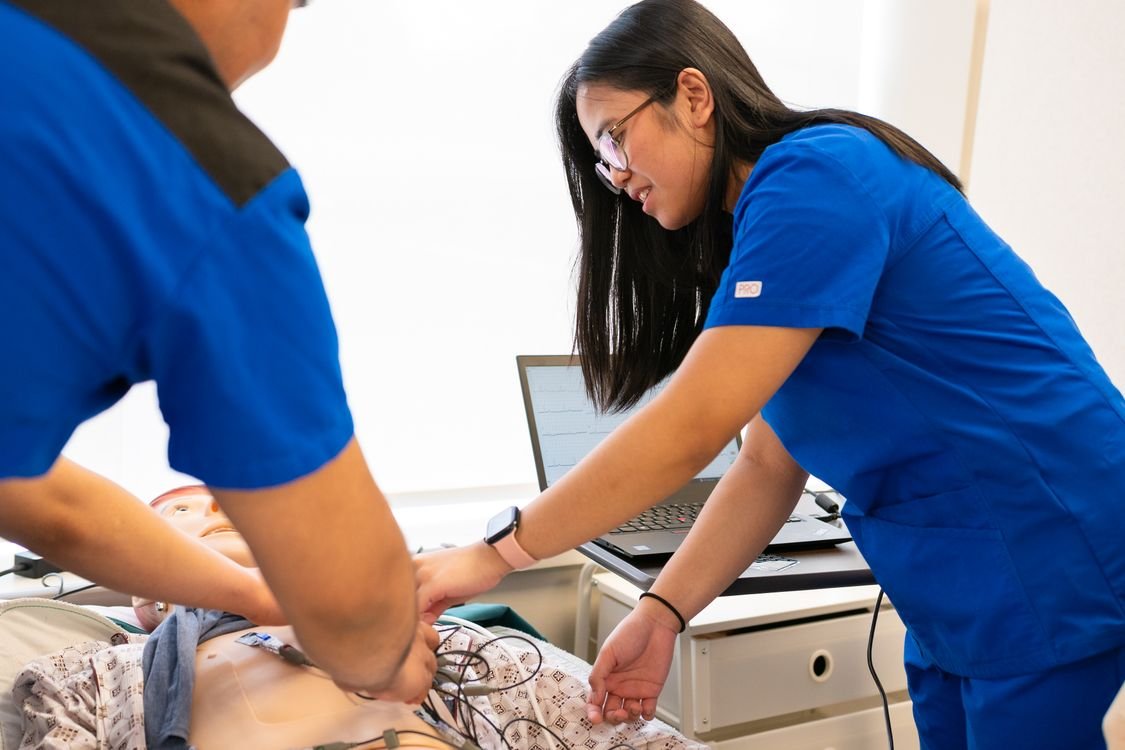
Clinical hours must be completed in person, in a real healthcare setting, under qualified supervision. Your program will arrange placements — often called clinical rotations — in hospitals, long-term care facilities, or community clinics. Laboratory sessions are also usually in person: you practise on mannequins and with classmates before working with patients, and must demonstrate competence first. Be cautious of any program promising a fully online LPN qualification with no in-person clinical training: that is not how licensing works in the United States.
Typical Program Structure and Prerequisites
Programs vary in length, structure, and schedule. Some are full-time, while others offer part-time or evening options that take longer. Rather than comparing by length alone, look at how hours are divided between classroom teaching, laboratory practice, and clinical placement, and whether the schedule fits your commitments.
Prerequisites also vary, but most programs ask for a high school diploma or equivalent, an entrance assessment in reading, maths, and science, and health and background checks before clinical work. Before clinical work begins, you will usually need proof of vaccinations and a health screening, so get them sorted early.
How to Choose an LPN Program
Choosing the right program matters more than choosing the cheapest or fastest one: a poor choice can leave you with a qualification your state board does not accept.
Check Accreditation and State Approval
First, confirm that the program is approved by your state board of nursing. Without state approval, you may not be eligible to sit the NCLEX-PN or to apply for a licence. Accreditation is a separate check: accredited programs have been reviewed by a recognised body against national standards, and it can matter if you later want to move from LPN to registered nurse.
Look at Clinical Placements and NCLEX-PN Preparation
Ask where clinical placements take place, how far you may need to travel, and how the program prepares students for the NCLEX-PN: good programs build in practice questions, mock exams, and revision sessions, rather than leaving preparation to the final weeks.
Compare Costs, Schedules, and Support
Compare the total cost, not just tuition: ask about books, uniforms, lab fees, exam fees, and background checks, plus financial aid and payment plans. If you are new to learning online, this guide to using a learning management system explains the kind of platform many schools use: https://therenweb.com/lms-renweb/ Talk to current students or recent graduates if you can.
How to Study Effectively in a Hybrid Program
Hybrid learning gives you flexibility, but it also asks more of you: nobody will notice if you skip a recorded lecture, and it is easy to fall behind quietly. Set fixed study times each week and treat them like classes you must attend. Work through the material in order, take notes in your own words, and test yourself with practice questions rather than simply rereading. If a topic confuses you, ask your tutor early. Arrive prepared for in-person sessions, so skills labs and clinical days can be spent practising, and keep placement schedules, deadlines, and exam dates organised.
Frequently Asked Questions
Can I become an LPN completely online?
No. You can complete much of the theory online in a hybrid program, but skills labs and clinical placements must be done in person, and you must pass the NCLEX-PN and meet your state board’s licensing requirements. Check any program claiming a fully online route with your state board before you pay anything.
Do I need previous healthcare experience to start LPN training?
In most cases, no. Practical nursing programs teach the clinical skills from the beginning. Previous experience as a nursing assistant or caregiver can help, but it is not usually a requirement.
What should I check before enrolling in an online or hybrid LPN program?
Check state board approval, accreditation, and in-person clinical placements in real healthcare settings. Ask about the total cost, the schedule, support for online learners, and NCLEX-PN preparation. If a program cannot answer these questions clearly, treat that as a warning sign.
What happens after I finish an LPN program?
After completing an approved program, you generally apply to sit the NCLEX-PN. Once you pass and meet your state board’s other requirements, you can apply for your LPN licence and start working. Some LPNs later continue studying to become registered nurses — a separate decision you can make after gaining experience.
Conclusion
Online classes to become an LPN can make nursing training more accessible, especially if you need to fit study around work or family. The theory can be learned at home, at your own pace. But the heart of the training — learning to care for patients safely, in person, under supervision — cannot be done on a screen.
Choose a program that is honest about that balance: approved by your state board, accredited, and clear about its clinical placements. Study steadily, use your in-person time well, and prepare carefully for the NCLEX-PN. An LPN qualification can then be a solid first step into healthcare, with practical skills, regular patient contact, and a route to further study if you want it later.